The July/August/September 2008 edition of Hinduism Today Magazine has been released in PDF and is now available for free on your computer here.
Enjoy the new “View Multimedia” option, an easy way to navigate though audio, videos and slide shows from all issues of the Digital Edition. In this issue, we feature a video from sacred ceremonies at Tiruvannamalai, India, rarely seen by anyone.
Watch the video for highlights from this issue:
Preview of Contents:
Our fully-illustrated 16-page Educational Insight take you on a journey into the life and teachings of one of India’s greatest masters, Sri Madhvacharya. His tale is full of philosophical growth, amazing encounters during his youth, magical happenings and deep interpretations of the ancient Dharma. If you ever wanted to understand the pure dual path, and compare it with Sankaran advaita, this is the resource for you.
So, Which of the Gods is greater, Siva or Vishnu? You’ve heard the arguments. You’ve endured the fables and the foibles of those who argue one side or another. Our publisher, Bodhinatha, gives an unbeatable clear answer.
When an Indian swami crossed the ocean to visit devotees in the West, he was deeply criticized and certain of his worship rights were curtailed. Follow the adventures of Sri Sugunendra Tirtha Swami and in the bargain explore the history of the amazing monasteries and temples in Udupi.
In Karnataka one of the foremost swamis of India opens a magnificent temple for Lord Siva. The Kalabhairava Temple is the work of Sri Balagangadharanathaswami, who happens to also be Hinduism Today’s “Hindu of the Year.” Find out why.
Henry David Thoreau, an American sage? See why we think so.
Follow a group of modern youth on pilgrimage, see what makes them choose a spiritual path when all of their peers are following something quite different.
And much more…. stories of social service with a twist, a photographer who can’t shoot enough of Lord Ganesha, warnings about inter-religious marriage, and a look at the dubious wisdom of drugging our children.
Instructions: If you have previously subscribed to the digital edition, you can simply launch the application Hinduism Today Digital you have on your computer and download the latest issue PDF’s. If you have not yet subscribed to the digital edition (note: this a different subscription than the print edition) go to: http://www.hinduismtoday.com/digital/ . Remember, it’s free.
For who still prefer a traditional, in-your-hands magazine that you can take anywhere and read at leisure away from computers, our gorgeous print edition is available worldwide.
HINDUISMTODAY is an award winning, Macintosh-generated, full color quarterly news magazine articulating Indian spirituality for 135,000 readers around the world. It was founded January 5, 1979, by Satguru Sivaya Subramuniyaswami for the following purposes:
To foster Hindu solidarity as a "unity in diversity" among all sects and lineages;
To inform and inspire Hindus worldwide and people interested in Hinduism;
To dispel myths, illusions and misinformation about Hinduism;
To protect, preserve and promote the sacred Vedas and the Hindu religion, especially the Nandinatha Sampradaya;
To nurture a truly spiritual Hindu renaissance.
To publish a resource for Hindu leaders and educators who promote Sanatana Dharma.
FREE OMs, Visit the Original Hinduism Today Aum Page! Sacred Aums are now on the web, free for all to enjoy and use: As many of you know, the monks at Kauai Aadheenam in Hawaii have been collecting Aums (also spelled Oms) for many decades. We found these sacred symbols on walls in India and T-shirts in Colombo, in wrought iron gate designs on temples and painted in the sand with colorful grains. Plus the intrepid Hinduism Today designers made our own over the years, and scores came in through e-mail from every corner of the globe. We even made a CD with high-resolution versions. Today marks the first day in history when these aum designs and illustrations, signs and digital creations are ALL on the web, free and abundant, our gift to you all. Bookmark this page, so anytime you need an idea, or a web button you can grab one of these remarkable creatures.
She gave a talk on the subject "Nepal: A New Era", organised by New Delhi-based Vivekananda Kendra International on July 2nd, 2008.
Shri Deb Mukharji said that it was unfortunate that certain people in Nepal were using the issue of the Indo-Nepalese Treaty to criticize India. He went on to say,"The fact is that the treaty benefits the Nepalese people greatly. The moment this treaty is cancelled every Nepali in India turns into an illegal immigrant."
According to Shri Mukharji, "India and Indians have to realize that Nepal came out of an almost impossible kind of position after being affected by the maoist conflict, during the recent landmark and historical elections. Therefore the best thing would be to give Nepal some time to stabilize before a meaningful dialogue is begun with them."
The event attended by a hall packed with intellectuals, senior bureaucrats and social workers, was presided over by Shri Vijay Kapoor, former Lieutenant Governor of Delhi and the Vice President of Vivekananda Kendra International's New Delhi Chapter.
2. For Hindus in America, It's Personal
"For special religious festivals, we gather at the temple in Flint. However, there's no head of the church or official leader as such, just a priest" the retired engineer said.
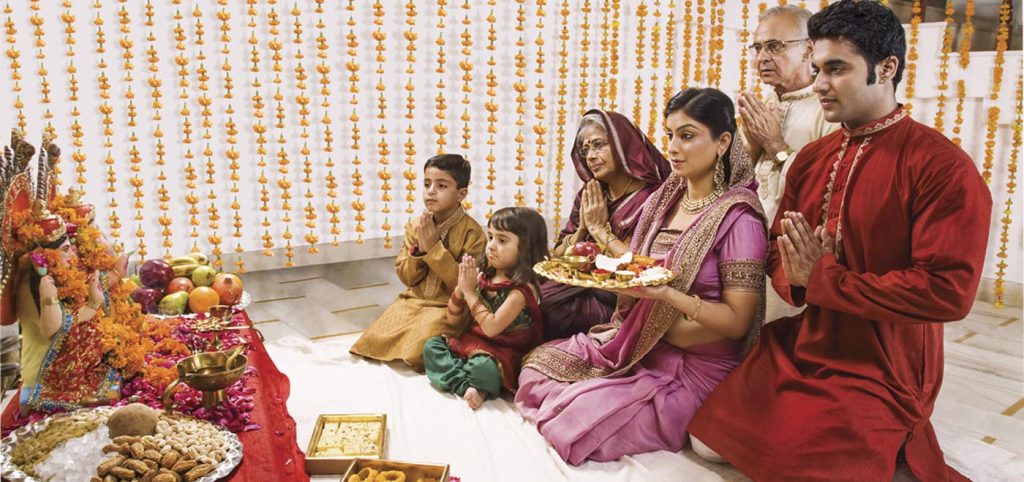
Drew E. Hinderer, professor of philosophy and religion at Saginaw Valley State University, explains that "Performing prayers at home altars enables believers to connect with the Divine on a much more personal level. For Hindus, God reveals Himself in everything.
"To be Hindu in America is much more an intentional choice than it is in India," said Diana Eck, professor of comparative religion and Indian studies and director of The Pluralism Project at Harvard University in an Internet report. "Even if you're first generation, you have to decide to you perpetuate it or it may go away."
3. Utah Governor Visits Hindu Temple, With A Special Guest
SOUTH JORDAN, UTAH, USA, July 4, 2008: The wonder in her eyes, the calm with which she accepted ceremonial blessings, showed that Asha Huntsman, 2, felt an immediate connection. Adopted from India and brought home to Utah early last year by Gov. Jon Huntsman Jr. and his wife, Mary Kaye, little Asha seemed to relish the colorful celebration and crowds that surrounded her at South Jordan's Sri Ganesha Hindu Temple. She, her parents and most of her siblings came to the temple for the first time last week to commemorate its fifth anniversary.
"She kept reaching out for the Indian women," Mary Kaye Huntsman marveled later. "There's something deeper that we can't understand... We will come out here often." Hindu priests greeted Utah's first family with Sanskrit blessings, and those gathered around, in vibrant saris and other customary clothing, sprinkled their guests with holy water and flower petals as they walked inside to stand before golden shrines.
The governor stood with Asha in his arms as the priests presented Lord Ganesha, the elephant-faced deity who removes all obstacles, with offerings of food, incense and chants. Community leaders honored the family with sweets and auspicious markings on their foreheads and then guided them through the temple to its various gods and goddesses, including the ones for strength, learning and wealth, and its shrine for the nine celestial beings.
Outside, beneath blue skies, the governor helped unveil the temple's two new granite pillars before thanking the crowd of hundreds, a mere sampling of the nearly 5,000 Utahns with ties to India, for bringing the traditions of Hinduism and their native country to Utah. "By doing so, you make us a better and stronger state," he said. "Thank you for honoring us, and we hope in return to be honoring you."
MALIHABAD, UTTAR PRADESH, INDIA, June 27, 2008: Haji Kalimullah Khan has a rare technique of growing more than 300 varieties of mangoes of different shapes, sizes and hues on one single tree.
When Khan talks about the variety of mangoes grown by him in his orchards, it seems that he is fondly referring to his family members. Khan's prized tree is about 100 years old on which he started work in 1987.
The craft developed by him has become a mystery for researchers and agriculturists from the country and abroad who have been left baffled by his work. The sexagenarian, who also finds mention in the Book of records for growing the rare tree, has the support of his sons in keeping the tradition alive. Khan has also cultivated a new variety of all season flowering guava which on ripening grows as red as an apple.